

Curator Gregos, discusses the ‘The Cosmopolitans’ exhibition: Looking at the Eastern Mediterranean ‘from here’
EMΣT Art Director Katerina Gregos explains that with the upcoming “The Cosmopolitans” exhibition, they aim to reinterpret the shared memory, migrations, and experiences of coexistence in the Eastern Mediterranean from a perspective outside of Western-centric narratives.
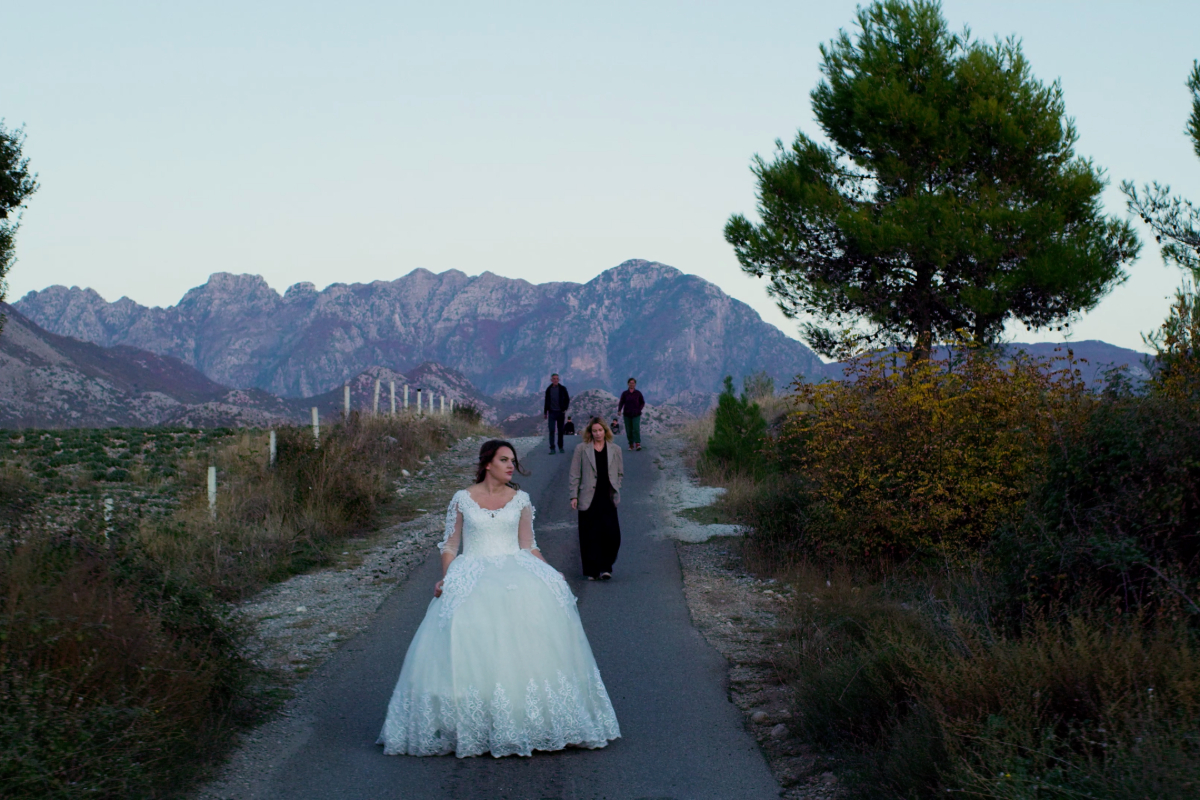
Nisa Sude Demirel
[email protected]
The Eastern Mediterranean, where different peoples, languages, and faiths have converged for centuries, is once again making headlines today due to debates over borders, wars, and migration. EMΣΤ (the National Museum of Contemporary Art) in Athens is preparing to explore these conflicts—as well as a shared cultural heritage—through a new exhibition program featuring works by numerous artists from diverse regions. The exhibition titled “The Cosmopolitans,” which showcases the region’s multi-layered culture, features works by artists such as Jani Christou, Niki Kanagini, George Lappas, Stathis Logotheti, and Hera Büyüktaşçıyan. Rather than approaching Greece from a Western-centric perspective, the exhibition examines it in the context of the Eastern Mediterranean, the Middle East, the Balkans, and especially Turkey; this time, it focuses not on wars but on shared practices of coexistence.
Katerina Gregos, EMΣΤ’s art director and the exhibition’s curator, explained the starting points and themes of the “South by Southeast” and the upcoming “The Cosmopolitans” exhibitions to Evrensel.
Katerina Gregos | Fotoğraf: Kristina Madjare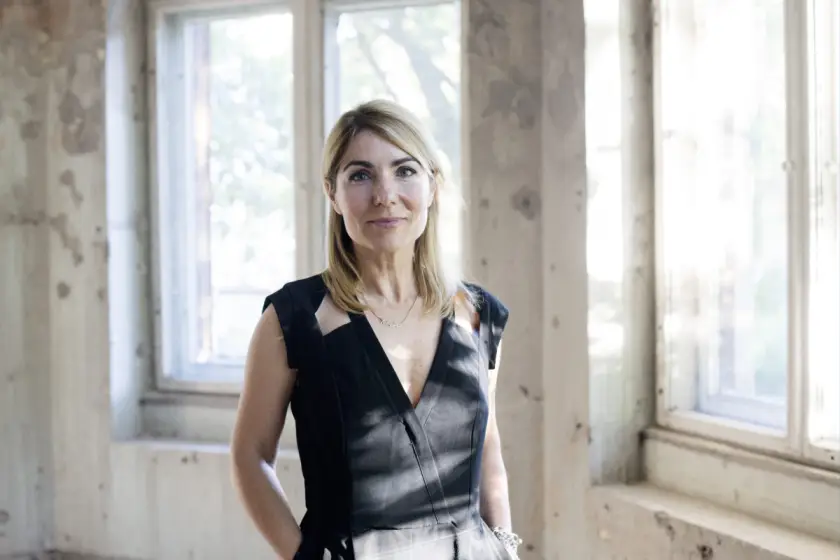
South by Southeast is up and running, while The Cosmopolitans are in production and will be opening in March 2027. In many ways, the two exhibitions (one a collection show the other a temporary exhibition) are the culmination of a process that began many years ago, when I arrived at EMΣΤ in 2021. One of my central ambitions was to rethink both the museum’s mission and collection policy in relation to Greece’s actual geopolitical and cultural position, where rather than as a peripheral extension of Western Europe, it is part of a far more complex and interconnected geography encompassing the Eastern Mediterranean, the Balkans, the Near East, and North Africa.
Of course, since there is a lot to rethink when reflecting on Greece’s historical position at the crossroads of continents, empires, religions, and migration routes, just an individual exhibition did not feel enough. The Cosmopolitans is not only a major group exhibition, but part of a wider programme, which unfolds across 2026 and into 2027 and explores the Eastern Mediterranean as a site of cultural exchange through exhibitions, solo presentations, workshops and events. With this programme - which also looks into diasporic narratives of the region and began with the solo exhibitions of Stathis Logothetis, Niki Kanagini, Jani Christou and Goerge Lappas in Spring this year, and continued with South by Southeast, leading to The Cosmopolitans in 2027 - I wanted to reflect on Greece’s historical position as a crossroads and to propose a counter-narrative to insular nationalism and Western exceptionalism. At this very particular historical moment – when the world is once again grappling with questions of borders, migration, nationalism and regional conflict – museums like the EMΣΤ in Athens should help foster conversations around these themes, and show how contemporary art can help us rethink coexistence by ‘turning East’: that is deconstructing pre-established narratives and uncovering hidden histories of Greece and its neighbouring countries.
You emphasize an alternative lens to the 'Western-centric perspective.' What does this mean for art in general, and how does this exhibition reflect that vision?
All the aforementioned exhibitions that are part of The Cosmopolitans as a thematic cycle for 2026/27. They start from the very same question: how can contemporary art rewrite the cultural geography of Europe and the Near East? By both highlighting artistic practices emerging from the South Eastern Mediterranean, and also revisiting the work of important diasporic artists from the region whose practices are still under-recognised internationally, The Cosmopolitans precisely explore how museum programming can challenge Western-centric narratives and rethink Europe through the histories and realities of the Eastern Mediterranean. A clear example of this is the solo presentation of the works by Hera Büyüktaşçıyan, one of the exhibitions EMΣΤ 2026 programme unfolds through. While reinforcing the museum’s commitment to fostering meaningful cultural exchange across the Eastern Mediterranean, Hera's exhibition resonates strongly with EMΣΤ’s Cosmopolitans framework for it foregrounds cross-regional dialogue also through the collaboration with curator Nilüfer Şaşmazer of Arter—one of Istanbul’s leading contemporary art institutions.
With this curatorial exploration – and through all the meaningful collaborations this exploration allowed me to activate – I wanted to shed light on the works of artists, curators and intellectuals who offer a counter-narrative to this history: not to deny Greece’s foundational role in European civilisation of course, rather to highlight its often overlooked, historical connections to the Balkans, the Eastern Mediterranean, Turkey, the Levant, and North Africa.
Why did you choose the title 'The Cosmopolitans'? How does this title reflect the exhibition's core aim and content?
The title refers to a particular form of cosmopolitanism that unfolded in the port cities of the Eastern Mediterranean, including Thessaloniki, Constantinople, Smyrna, Alexandria and Beirut as a condition of the Ottoman Empire. These were places where people of different cultures, religions and languages lived alongside one another, creating rich and complex societies shaped by exchange and coexistence. The exhibition explores what happened when many of these plural worlds were dismantled during the twentieth century through the rise of nationalisms, the drawing of new borders and forced migration. A key historical point of reference is the 1923 Greco-Turkish population exchange, which profoundly transformed the social and cultural fabric of the region and our two countries. At the same time, I was interested in cosmopolitanism not as a nostalgic ideal, but as a contested concept. Today we are once again witnessing the rise of nationalism, exclusionary politics and cultural anxieties. The exhibition asks what we can learn from these histories of coexistence, while also recognising their complexities and contradictions. For me, The Cosmopolitans is about how we live with differences. It explores whether identities can be multiple rather than singular, whether we can be rooted in our own cultures while remaining open to others, and what forms of belonging might be possible in an increasingly interconnected but also divided world.
Eleni Mylonas, Box Man, 2011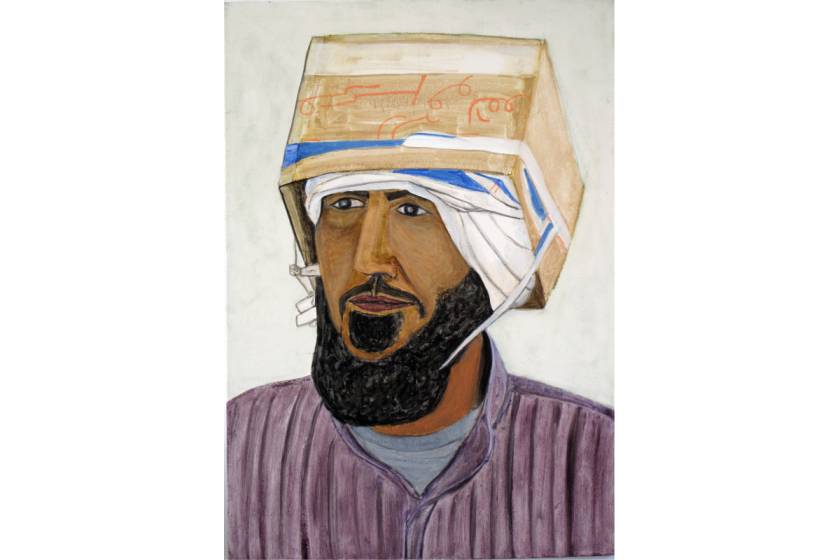
The exhibition focuses on regions such as the Balkans, the Near East, North Africa, and the wider Mediterranean—areas that have historically faced ongoing conflicts and unrest. Given this climate, what role do you think this exhibition can play in fostering its vision of regional coexistence?
The exhibition was conceived before the current escalation in the Middle East and is not intended as a direct response to specific events such as the war in Gaza or the recent conflict involving Iran. However, it would be impossible to address the Eastern Mediterranean and the Near East without acknowledging that the region continues to be shaped by conflict, displacement, contested histories, and geopolitical tensions.
With this exhibition, we do not seek to provide commentary on current events, but we would like to offer a deeper historical and cultural framework through which some of these realities can be understood. Many of the artists in South by SouthEast - the rehang of the permanent collection bringing together 100 works by 50 artists from over 20 countries – are exemplary in doing so. Artists such as Mona Hatoum, Lawrence Abu Hamdan, Emily Jacir, Walid Raad and The Atlas Group, Akram Zaatari, Rabih Mroué, Adrian Paci and many others explore the contested politics of the region and their impact on peoples, cultures and daily realities, reminding that war, migration, identity, and historical memory – have much deeper roots.
I don’t think that art can or will save the world or offer viable solutions in such complex times, but I am deeply convinced that contemporary art has an important role to play in society, as one of the last frontiers of free expression; as something that teaches us to read in between the lines and behind images and given facts. I see my role as the Director of a National museum as a mission in ensuring that the EMΣT and its programming always foster conversations around the most urgent themes of our times. Αrt cannot change the world; but it can play a transformative role in how we think about the world.
What kind of emotional impact do you hope South by Southeast will have on visitors as they leave the gallery?
Ultimately, I hope visitors of both South by Southeast and The Cosmopolitans can leave the museum in a more nuanced understanding not only of Greece, but of the Eastern Mediterranean as a whole: a region whose histories have been profoundly interconnected for centuries and whose relevance to contemporary debates is perhaps greater today than ever. The emotional impact depends on which perspective you are coming from. For me personally, I find it very moving to reflect on all the intertwined - if difficult - personal histories or the fruitful exchanges that Greece and Turkey shared for example, and which have been lost or subsumed by realpolitik and nationalist attitudes on both sides.


